Overthink Podcast
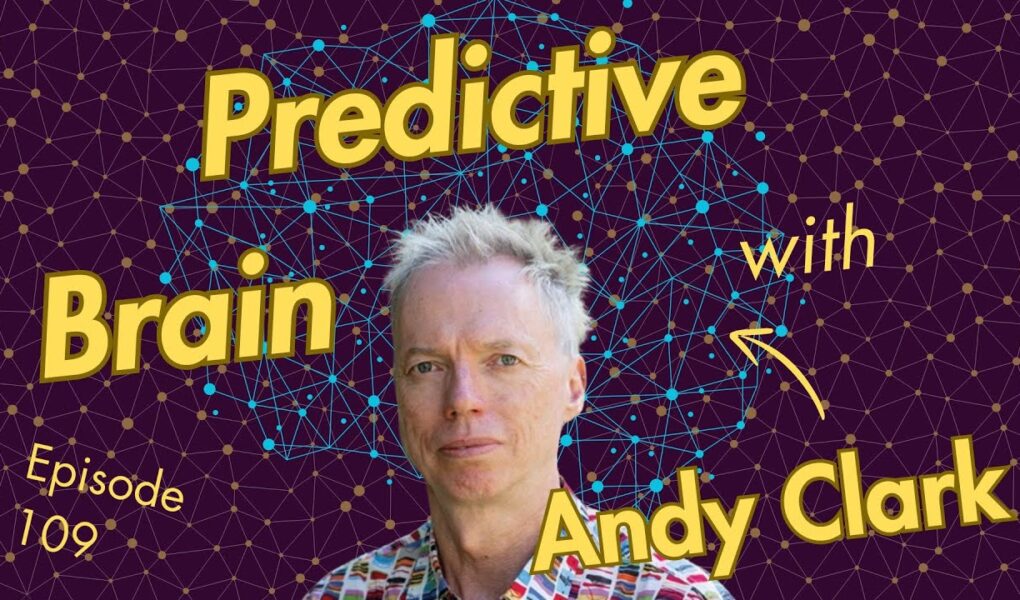
Episode 109. Predictive Brain with Andy Clark
Phantom phone buzzes? Painless mosquito bites? Toy masks flipped inside-out? It might be your brain bringing order to its complex world. In episode 109 of Overthink, Ellie and David interview cognitive philosopher Andy Clark, whose cutting-edge work on perception builds off theories of computation to offer an intriguing new model of mind and experience. He explains why the predictive processing model promises a healthier relation to neurodiversity, and they all explore its real-world applications across placebos, road safety, chronic pain, anxiety, and even the accidental success of ‘positive thinking.’ Plus, in the bonus, Ellie and David discuss depression, plasticity, qualia, zombies, and what phenomenologists can bring to the cognitive table.
Overthink is a philosophy podcast hosted by your new favorite professors, Ellie Anderson (Pomona College) and David Peña-Guzmán (San Francisco State University). Check out our episodes for deep dives into concepts such as existential anxiety, empathy, and gaslighting.
Support Overthink on Patreon here: patreon.com/overthinkpodcast
Works Discussed
Thomas Bayes, An Essay Towards Solving a Problem in the Doctrine of Chances
Anjali Bhat, et al., “Immunoceptive inference: why are psychiatric disorders and immune responses intertwined?”
Andy Clark, The Experience Machine: How Our Minds Predict and Shape Reality
Sarah Garfinkel, et al., “Knowing your own heart: distinguishing interoceptive accuracy from interoceptive awareness”
Hermann von Helmholtz, Treatise on Physiological Optics
David Hume, A Treatise of Human Nature
Alva Nöe, Out of Our Heads: Why You Are Not Your Brain, and Other Lessons from the Biology of Consciousness
Anil Seth, Being You
This Might Hurt (2019)
Enjoy our work? Support Overthink via tax-deductible donation: https://www.givecampus.com/fj0w3v
Join our Patreon for exclusive episode segments, monthly Zooms, and more: https://www.patreon.com/overthinkpodcast
Website: overthinkpodcast.com
Facebook: https://www.facebook.com/Overthink-podcast-105420885026249
Apple podcasts: https://podcasts.apple.com/us/podcast/overthink/id1538249280
Spotify: https://open.spotify.com/show/4aIlXHTDz5vrc78DyjFg66
Buzzsprout RSS: https://feeds.buzzsprout.com/1455199.rss
Find us on Instagram, Twitter, and TikTok at @overthink_pod
Source


David's question at the end about the distinction between conscious and unconscious expectations actually poses the question of the nature of consciousness itself. Good luck with that! I'm certainly interested in these physiological feedback loops.
I've spent a lifetime wondering about the relationship between my conscious and subconscious minds, insecurely aware of their co-existence, certain only that intuition is a powerful force that we don't understand either.
OMG 😱!!! this one is going to be remarkable!
Fascinating talk, Ellie and David, congrats!! I think that in the coming years, the collaborative work of philosophers and scientists on this topic can bring us an exciting new type of ‘externalist’ understanding of the nature and the mechanisms operating in consciousness. However, as a follower of Buddha dharma and a meditation practitioner like Ellie, I believe meditation offers us a set of techniques to develop ‘internalist’ experiments, which can help us understand consciousness in a broader and empathic sense
This is super interesting to listen to, thank you sm as always for the great podcast episodes!
The idea of Surprise guiding our interaction with the world is an interesting one, very closed related to Karl Friston's Free Energy Principle. Friston mathematically characterizes these generative models as trying to minimize the surprise/free energy. However, there are some arguments against this sort of representational view of the mind, from Mearleu-Ponty one can reach the conclusion that skill full coping in the world doesn't require a representational (a generative model) of the world (I got those ideas from Hubert Dreyfus: Intelligence without representation paper)
Great episode! I'm excited that enctivist approaches to theory of mind-body-world are finally catching on, rather than the representationalist mode. I always try to remember though that, in a sense, the more we know, the more we don't know. The imagination is always errant. This stuff can get pretty sticky when people with lots of cultural and intellectual capital can claim they finally "grasp" or understand or are "starting get hold of" reality. Even though I love the bulk of what professor Clark and a lot of other thinkers say about this stuff, I also can't shake the feeling that people like artists and so called 'primitive' peoples have long known this stuff, but haven't written books with funding from massive knowledge (re: of experience) machines.
Thank You. This is like an AI/ML lecture talking about naive Bayes, perceptrons, CNN, layers, biases and in some sense reenforcement learning 😊
16:53 imperfect modeling and single point eye sight and missing or flawed global models. Think of the people blind to fear and such. Flawed predictive reasoning that can play out.
22:53 chemical influenced statistical modeling. Psychology, pharmacokinetics, biochemistry, cell modulation, ect.
26:53 Yep senses and loops of thought woven together. A story or narrative from the recent past as perceptions.
29:11 The rubber hand trick. 32:00 previous imprinting that gets used as part of predictive modeling. Dual use.
36:14 different states of mind. Biochemistry and environmental and feedback loops. Single train of thought vs complex multi modeling. Multi modal expansive and reductive refinement and pattern recognition. Biochemical processor with a small error rate that can expand out and then flaw the predictive modeling in ways. Biochemistry is a huge set of factors. Robert Kowalsky Stanford for the biology and biochemistry and environmental. Max Bennett for brain development parts. Darren Brown for environmental and psychological priming of types. That along with stuff in this talk.
Good talk. Thank you for sharing.
The more information you know or have about a system the more predictive power you can have. 1 timeline and universe to model. The mind has a locus of control through predictive modeling. An area of mind, I.E. your mind modeling the surroundings in ways. Your actual perception of though exists in the very recent past. A mix of inputs being processed in ways.
Wow!!!!
This was SO interesting! Thank you so much for this episode
The other hypothesis: you hallucinated the mosquito to create a distraction. Or someone mentioned a mosquito analogy from Buddhism. Usually in bad trips etc spiders show up but in a moment of boredom meditating maybe a mosquito. Any rate an actual mosquito makes more sense unless you really did put yourself in a trance like state. At any rate one can freak oneself out so Andy denying idealism is comforting at some level while we are alive. Benedryl or mildly dozing off too… an odd dream but explains the lack of any symptom or pain
Ah that feeling when your favourite podcasters interview your favourite philosopher ❤
Oh my, yes!
just keep coming across this Podcast about interesting topics!!
Predictive processing is acurate has to be that way. As i heard someone say it probably makes several predictions and updates it with sensory data coming in that makes perfect sence open to d idea anyway.