The Art Assignment
Pre-order our book YOU ARE AN ARTIST (which includes new assignments!) here: http://bit.ly/2kplj2h
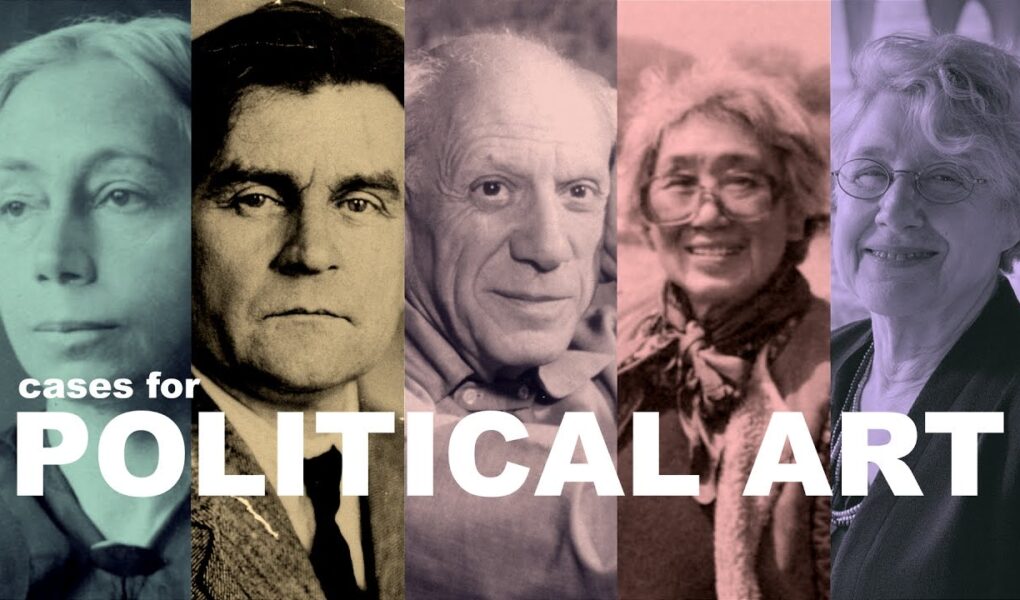
This week we explore some of the most powerful artworks ever made, making the case for political art one work at a time. Pablo Picasso’s Guernica, Kathe Kollwitz’s prints, Kazimir Malevich’s Black Square, Iri and Toshi Maruki’s Hiroshima Panels, and Martha Rosler’s House Beautiful: Bringing the War Home photomontages. What do you think of as political art?
—
Follow us elsewhere for the full Art Assignment experience:
Website: http://www.theartassignment.com
Instagram: http://instagram.com/theartassignment/
Extra Credit Group: http://www.facebook.com/groups/artass…
tumblr: http://theartassignment.tumblr.com/
All responses tumblr: http://all.theartassignment.com
Twitter: http://twitter.com/artassignment
Facebook: http://www.facebook.com/theartassignment
and maybe Reddit?: http://www.reddit.com/r/TheArtAssignment
Source
Coming back to this in 2026 America
9 years later and I’m unhappy again
Good work.
Дякую
Protest art is a powerful means of showing that there are many people against the current state of world affairs. Silence is a losing option.
STILL RELEVANT
I am just finding your channel and I am very sad that you no longer do these. They are very powerful and inciteful and inspiring!
i find this video narrow minded. You claim "war is bad" but you have no greater solution(s) to the problems we have.
The allied soldiers who fought the Axis powers during WW II were the most productive and effective politically expressive artists of the twentieth century. They used the blood of their enemies for the color red which they painted all over the globe using a very minimalist form of demonstration. Causing it to spill and leaving it lay was the best form of political propaganda. It's message was understood by all. DON"T PULL THIS TIGER BY THE TAIL.
Kszemir Malevich it's Ukrainian painter, god sakes
🎨 projects powerful messages and thought provoking.
Enough with the well deserved hiatus. Please rejoin the conversation. The world needs your voice right now. #thereturnoftheartassignment !!!
All art is political, anything else is merely decoration
I am delighted by this very well-demonstrated video. Thanks a lot for your excellent work.
Great series, thank you for it. In this episode on political art, I miss though one angle. The art of the oppressed, which can have many different forms that differ from the art produced by the free (which was mostly discussed here). My counterexample would be the underground art of dissidents in the former communist block, where the official regime had actually stolen and perverted the anti-war message, so the authentic artists had to find different ways of expressing what mattered. some of these art forms are surprisingly gentle and almost light spirited, yet still expressing a full political stance
Politics should not be an excuse to promote bad art. The best artist that have endured throughout history did not last because of their race gender or political agenda, they endured because they made great and innovative art.
I remember the Truth is project! It actually came to a place where I was volunteering so I had a chance to participate although I don't recall now what I said . . .
oh no,retirement ads.im not that old am I :0
I like her outfit and she has nice teeth.
As an artist I’ve taken another approach : I use abstract art and have others describe politics in interviews. Take a look at the project: Triptych Dialogue
4:13 – because in Russian chistianisty, the icon sculpture of Jesus crucified on the cross is placed in the corner of the ceiling – now being a black square.
Ah,yes the year Trump won,and know it well that the first and the year over all.
It's sad that truly important art work gets this soft art treatment.
👀
Using Art, I am creating one painting everyday in my YouTube channel here as a kind of protest against Putin’s aggression. Ordinary Russians and Ukrainians don't want the War! Please Stop This Terrible Russia-Ukraine War.
Malevich is Ukrainian (ethnicaly Polish) not Russian artist. And now there is also ongoing war in Ukraine started by Russia, and it's seems that just USA cares about it. I'm from region that occupied and I'm always wanted to pour my feelings into art but it's very heavy experience to come back to, but after your video I understand that it's need to be done, I don't know how yet. Thank you for your work and inspiration 🙏
Karya seni tema politik selalu menarik untuk di bahas, karena memiliki potensi untuk dapat mengubah kondisi masyarakat.
Art is a mirror of the world around us. Art should force people out of their comfort zones and think. The result of which is learning and hopefully change.
Stumbled upon this after watching the Case for Impressionism and it made me recollect my old self who is more inclined to making art in depicting issues that I value. It's also timely that my country, the Philippines, is going through a much heated political rife that is fueled with misinformation, fake news, and historical revisionism. Watching this made me understood again and amplified the power of art and how I can actually utilize it.
"War, follows me to the end…" K. Kollwitz.
btw, When Kollwitz was born, Kaliningrad was called Konigsberg.
Otto dix.. George groze and..
I call it art activism
And pro-war art? Does it exists? Is it any good?
such an open explosive intelectual time during Russian revolution.
Humanitarian too? 😃❤️💜🌹🕊
Did my comment really get deleted? So much for ART and Freedom of Speech, welcome to one size fits all.
great, very impressive
ALOHA-what about doing a Part 2 and including the brilliant artist Sue Coe and the politics of eating, and experimenting on animals
this is so amazing. I am an artist too, I make art on Political, Social and Environmental Issues.
Insta- @whatcansaveus
Malevich was not russian artist. He was born in a ukrainian-polish family in Kyiv, spend childhood in a different small cities around Ukraine (because of father work they were moving quite often). Also later on he was an art teacher in The National Academy of Visual Arts in Kyiv in the same time when there was working a lot of other now classic ukrainian artists. Even just his name – Kazimierz or in ukr. Kazymyr – is actualy typical polish name. So I'm just saying that it is not anyhow correct to call him russian artist just because he was born when it was rissian empire and later ussr
i would really like to know how a ball of yarn or a painting of a landscape can be interpreted as political. can you please make a video on that?
Great examples here. I make political art sometimes but it is very hard to find a gallery showing it. It's still a good mental exercise.