Boston Dynamics
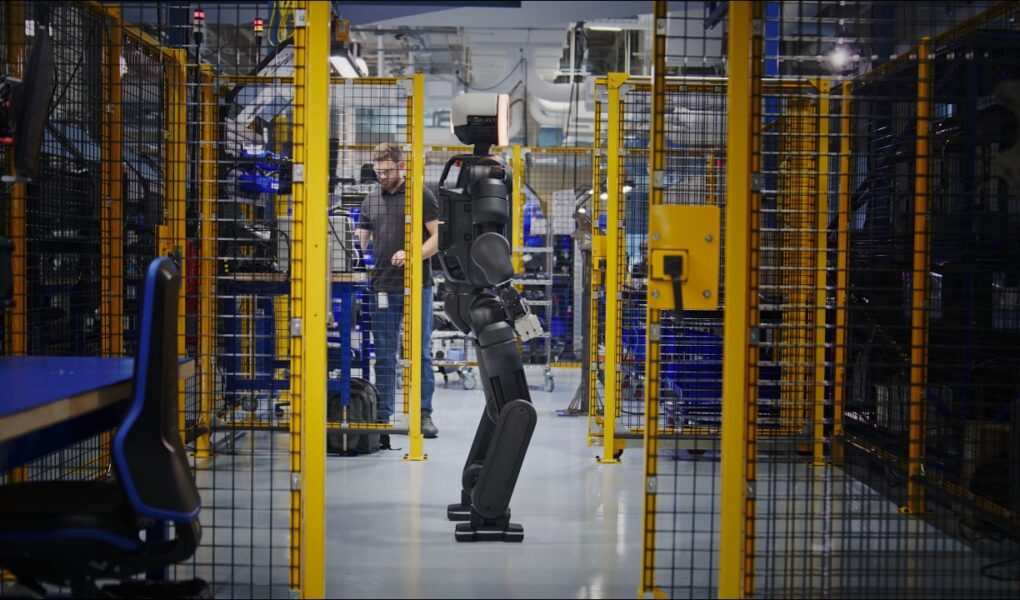
From custom part to running robot, the Atlas shop floor is built on precision, rapid assembly, and real-time collaboration. By machining parts in-house and streamlining assembly and repair under one roof, we are driving the manufacturing velocity needed to turn complex designs into walking hardware at scale. Build the future with us and explore open roles at bostondynamics.com/careers/
#BostonDynamics
Source
создавать роботов легко. пусть покажут роботов делающих что-то дельное
Great to see that the US companies catching up with the chinese ones slowly
Amazing to see the scaling of humanoids start to take place!
3:19 I just imagine if Elon was involved, he wouldn’t tolerate such a long time to implement an idea.
멋지네요^^ 그리고 성조기와 태극기가 같이 계양되어있는 보스턴 다이나믹스 공장이라.. ㅎㅎㅎ
"Cool," all of this is owned by South Korean Hyundai (+ SoftBank), thank you DARPA, for floating all the dark dollars overseas.
Getting lots of no-quotes is a sign of design engineers that either don’t have experience or aren’t coordinated enough with your manufacturing engineers. The only way to scale is to design the product around the manufacturing processes that are already readily available and at scale, not the other way around.
I don't want to see how you build
I want to see how it build
These people will have the last jobs on the planet while normies die outside the wall, in food riots. Amazing!
日本の工作機械を沢山使って頂いてありがとう!
Real robots for real work.
Boston Dynamics: Managers finally doing their job and managed to secure appropriate resources for engineers to be able to actually do some state of art technologies.
My company: Managers approved "Let's innovate!" big poster to be printed. – Resources, please? – No resources, do innovate in your free time after hitting KPIs.
Lots of talk….
Irobot inception
Enough with the music in the background; I want to hear the person talking and the sound of the robotic machine moving.
Cool 🙂
Build them with Roast Mode.
What would Dr Susan Calvin think ?
i look forward to the day the biological robots in this video are replaced by the inorganic robot to build MORE robots
https://youtu.be/dP_i7hRvGpE?t=71 Not sure the zoom-in on an old Haas VM-2 fits the mention of high tolerances, especially when you have GF machines next to it.🤣
surely they realise their jobs will be first on the block lol
Can't wait till all the engineers get replaced.
2030 video: How to hide from Atlas robots.
God what an amazing building. So pristine.
Great craftsmanship happens there, and the effort shows!
Literal flipping robots!
nobody else can do it –> does the thing with a standard CNC machine. LOL
25-count pulp egg tray – a very important part of the tech process… 😉
This is AWESOME!
shouldn’t the robots build themselves?
The idea is underrated I did not expect it to be this good.
Yeah… be proud of destroying humanity and its future… and then an idiot says: „earth won’t be habitable in the future and we need to go to Mars!“ 😏
3:14 I like how they have emergency stop and power buttons.. just to be sure..
@3:56 why Korean flag?
Looks like a very cool job advertisement
Miles Dyson loved his job too…
For the future viewers: Ground Zero. Before the Event.
(Good Luck)
all of those start of the art machine… and then there's the cardboard egg tray
Expensive Toys Built by Unproductive Researchers at Boston Dynamics, Wasting Huge Amounts of Money from HMC…
넘 비효율적이다 ㅠㅠ
Robots to help disabled people, I think most of them would prefer it if you invented technology to help them to get around, not a robot helper. When you don't use tools you developed yourself it means somebody else can make those precision parts, not just you.
blimey, so many overweight people
As a long-time fan of Boston Dynamics, it hurts to admit this, but we need to talk about both sides of their legacy.
On one hand, their engineering genius is undeniable. They did what everyone thought was impossible: they solved the fundamental physics of robotic balance, created the blueprints for dynamic movement, and single-handedly inspired a generation of engineers. Without their viral videos, the world wouldn't believe in humanoids, and billions of dollars in private investments wouldn't have flooded into this industry. They proved it can be done.
But on the other hand, their hype created a massive illusion that blinded US robotics. Boston Dynamics operated like a "forever startup"—burning through billions under Google, SoftBank, and Hyundai without building a single automated factory for mass production.
The US innovation system fell into the "MIT Club" trap—funneling resources into a closed circle of elites who perfected hyper-expensive, unscalable hydraulics. This institutional nepotism and cronyism happens across all of science. We must urgently entrust all such funding decisions to be controlled, or at least reviewed, by AI to avoid similar cases in the future. When the same tight circle of insiders monopolizes state grants for decades without delivering industrial scale, it kills open competition.
I love Boston Dynamics for breaking the technological wall, but the systemic cronyism in science that followed must be stopped.
Chappie vibes
sleeping bag
Great stuff, guys. 👍
I can't wait to see your home humanoid.
this is so hard. employ meeeee 😭😭
If I had the chance, I would start working for you as a mechanic right away.
Greetings from Germany
But when can we have one at an affordable price?
Whats is the purpose of this video?🤨
clankers