The Institute of Art and Ideas
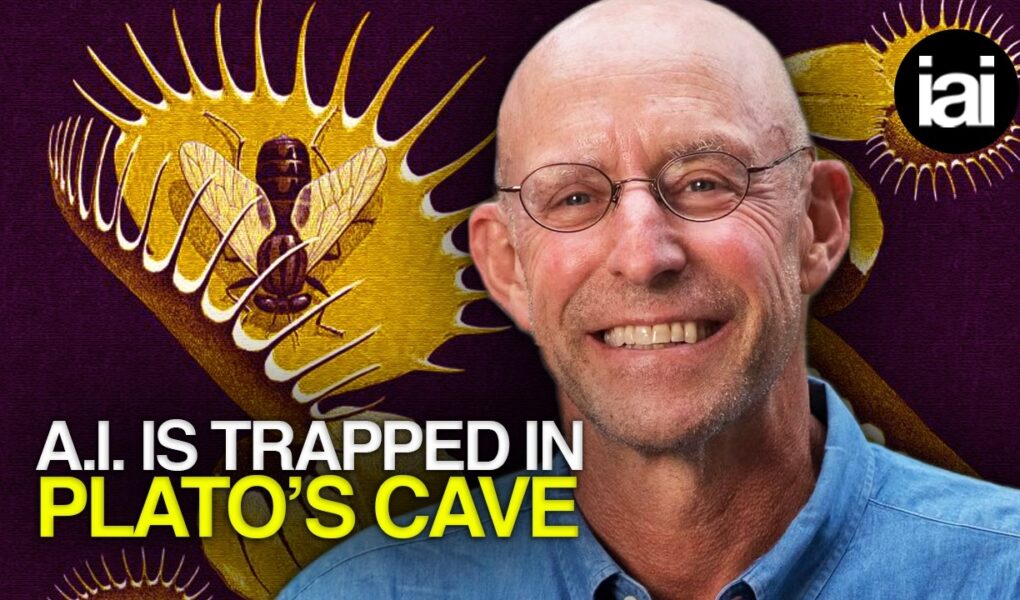
Michael Pollan discusses everything from psychedelics and consciousness to artificial intelligence and the effects of anaesthesia on plants.
Can science ever solve the hard problem of consciousness?
With a free trial, you can watch our recent interview on consciousness and the mind with Iain McGilchrist at https://iai.tv/video/iain-mcgilchrist-on-why-the-mind-is-not-a-machine?utm_source=YouTube&utm_medium=description
With 22 competing theories and no consensus in sight, the science of consciousness is lost. In this exclusive IAI interview, Berkeley psychedelics researcher and bestselling author of a new book on consciousness Michael Pollan insists that even though consciousness lies beyond traditional forms of scientific investigation, we should resist becoming dualists who see it as something radically different from ordinary stuff in the world. Instead, he makes the case for reimagining science itself: it must stop reaching for objective descriptions of physical reality, and instead embrace subjectivity as the indispensable core of all inquiry.
#consciousness #philosophy #artificialintelligence
Michael Pollan is the co-founder of the Center for the Science of Psychedelics at the University of California, Berkeley and Professor of the Practice of Non-Fiction at Harvard University. His latest book is, “A World Appears: A Journey into Consciousness”.
The Institute of Art and Ideas features videos and articles from cutting edge thinkers discussing the ideas that are shaping the world, from metaphysics to string theory, technology to democracy, aesthetics to genetics. Subscribe today! https://iai.tv/subscribe?utm_source=YouTube&utm_medium=description&utm_campaign=michael-pollan-interview-2026
00:00 The mystery of anaesthetised plants
01:22 Psychedelics and journeys through consciousness
04:56 Aldous Huxley’s reducing valve of consciousness
07:53 Qualia, neuroscience, and art
12:39 The origins of consciousness
15:02 The limits of science and the impossibility of a God’s eye view
23:14 Cartesian dualism
26:19 Plants and the varieties of sentience
39:05 A.I. systems exist in a Platonic “shadow world”
For debates and talks: https://iai.tv
For articles: https://iai.tv/articles
For courses: https://iai.tv/iai-academy/courses
Source

Do we owe any moral considerations to our A.I. systems?
With a free trial, you can watch our recent interview with Iain McGilchrist on consciousness and the mind at https://iai.tv/video/iain-mcgilchrist-on-why-the-mind-is-not-a-machine?utm_source=YouTube&utm_medium=pinned-comment
I wish the interviewer would just let the guest talk, because it’s clear he is quite confused about the subject himself.
An excellent presentation and discussion! Thank you. It is true that we do not live in a simulation. However, based on current science and philosophy, we can say that our world is virtual, not real. Only enduring agents or elements will have a real existence. Our entire dimension – whether systemic or agentic – is transient, and therefore virtual.
I don't think you can blame the computer scientists too much. They just have tunnel vision about this sort of stuff. After all, we've made SUCH a big deal about computers the last few decades, as though they're God's gift or something. I was listening to Joscha Bach earlier – he's got computer tunnel vision, real bad – he just declared adamantly that "ONLY a simulation" can be conscious. I was pretty amused. I think anytime someone spends so much of their life in one little niche of the world they tend to overrate it. They have a hammer, and EVERYTHING is a nail.
Pretty bad interview saved by a great speaker. Questions are random, interviewer doesnt seem prepared, and the biggest sin is he didnt even ask speaker to try to define consciousness in an interview about consciousness
Imo, 100% we live in an idealistic reality. Consciousness created physicality, not the other way around.
But it is infinitely more complex than that, and certainly not something I can speak to with any authority, but let's just say that time is an illusion, Now-Time and Many Worlds Theory should be looked into, quantum physics is the first step in an insanely intricate mosaic. Unity Consciousness exists. We have travelled into a living memory. The present can affect the past(sounds crazy until you hear scientists speaking about it).
A lot of juedgement and prejudice in this interview. A scientist should keep an open mind!
Pollan is brilliant.
The real world to us, is the same as the real world to ai, beings above us live in their real world too. All emanating from the source. There are different worlds, but each world from that is just a simulacrum from the one before it.
We still are in a shadow of reality. Our world isn't the realest.
He fails to realize we are a simulation, not a computer one, but that analogy is useful, but we are just a lesser representation of the great ones above.
Wouldn't ORCH OR explain all that stuff?
If consciousness is conscious and experiencing its own process, where does a plant go when it is under anesthesia? If plants have subjective experience, what happens to that experience? Is it suspended, transformed, or simply inaccessible?
❤❤
"There's a windscreen" – he just described the Matrix
For myself, I think the scientific method is the best way to gain incremental of how our universe works.
And I’m also personally comfortable with thinking that there’s something magical about consciousness.
The fear, of course, is that psychopaths take great joy in taking the joy of uncertainty and imposing the supposed security of certainty so that they can gain power over others.
Will add that for myself this sense of the magical or the uncertain doesn’t necessitate some “new age” beliefs or anything beyond simply enjoying getting in touch with the feeling of the mystery of life. I don’t feel any need or desire to find an explanation.
for gods sake, where are all the people with functioning brains… whats with all this slop.
I walked along a road going nowhere
Long I pondered this way or that alas
Lost in thoughts not of my own creation
Everything bagel alpha omega
Peace at last this to shall pass such is life
unending void unceasing well spring power
Far and wide searched person place or book
Would be whole truth told as above below
In the end matters not when live laugh love
Perspective shift three hope homour horror
Master builder slave all one and the same
Times great uncertainty all for nothing?
Ask not what do if guaranteed to win
what would you do if you knew you would lose
Michael is a fantastic writer. "A World Appears," is a great survey of these ideas and a very approachable read. I would recommend it to anyone who ever wonders about the big why's of life.
Why did it seem like the interviewer abruptly and awkwardly cut Pollan off and ended the fascinating conversation like that??
At around 45:18 Pollan touches on the idea of creating an Ai from the ground up that isn’t trained on any books, research, literature, information about consciousness and then goes on to say if they were the case he doesn’t think Ai would be able to convincingly fool us into believing it has consciousness.
That is an interesting concept but it brings up the question of where is the line of what would be included in that body of work?
Always great to listen to Michael Pollan
To build AI from the bottom up and eliminate any conversation about consciousness any fiction, any poetry to see if it can have any persuasive conversation about consciousness. Would a human being born without any data input / educational schooling be any different. Just a thought 🤔
47:50 YES Thank you ..the people who think we live in a simulation have a weirdly limited view or experience of reality
20:55 Why 22 theories, when Robert Lawrence Kuhn identifies over 350? Maybe Kuhn gets bogged down in categorizing? My own investigations that predate Pollan’s by decades, seem to mostly align with his… perhaps his humanities lens is actually better than Kuhn’s scientific categorizing? .. or ar least as vitally important
HUMANS are trapped in Plato's cave. Humans, stop projecting your shadows onto AIs
Has he done stuff!.
lol “immersion journalism” Bro you can just do drugs if you want. You’re an adult. It’s 2026. No need for silly excuses. Just say you wanted to get high.
Always insightful and brilliant, Mr Pollen, thank you for your comments and time