La filosofia tiene svegli
#DanielDennett #ExtendedCognition #Philosophicaltalk
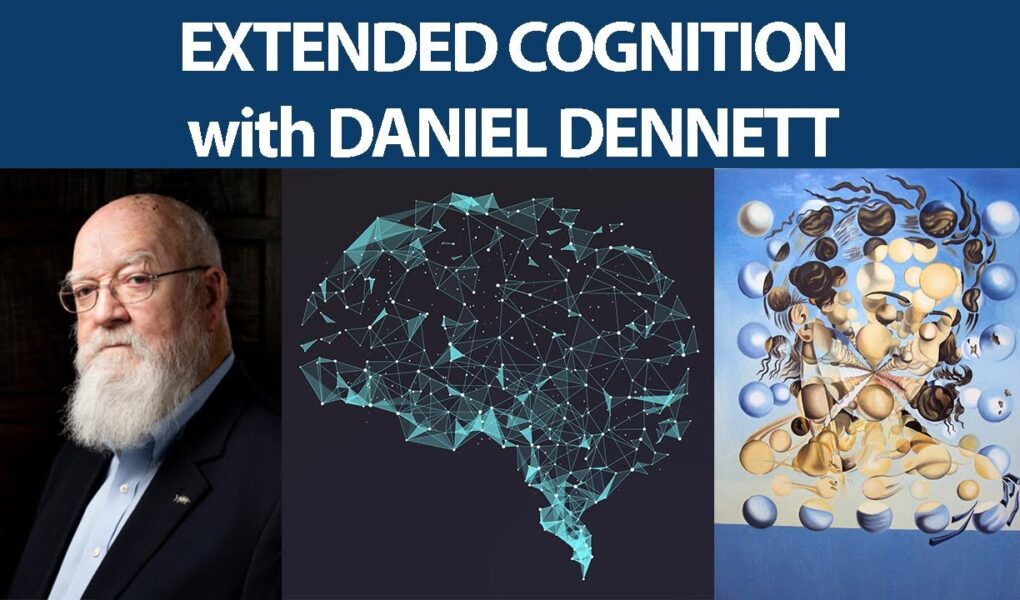
Subtitles available in english. I’m thankful for this opportunity to talk with Professor Dennett. I’m a bit sorry for the viewers of the video, this was conceived more like a personal conversation rather than an interview for the public. I am sorry if I was a little confused but there was a lot to say and it was not easy.
Professor Daniel Dennett’s website: https://ase.tufts.edu/cogstud/dennett/
Daniel Dor: The instruction of imagination: https://amzn.to/3sQgwrg
Dennett: From Bacteria to Bach and back: https://amzn.to/3Ex23Ty
Clark: Supersizing the mind: https://amzn.to/32ML2rm
My social:
TELEGRAM: https://t.me/lafilosofiatienesvegli
SPOTIFY: https://open.spotify.com/show/7bznXLXwPIZ6bf2q7fC4qm
INSTAGRAM: https://www.instagram.com/la_filosofia_tiene_svegli/?igshid=hnandi4hp8fi
FACEBOOK: https://www.facebook.com/nottambulienoumeni/
ACADEMIA.EDU: https://independent.academia.edu/GuidoCassinadri
Bibliography:
An introduction to the debate in italian: Di Francesco, M., and Piredda, G. 2012: La Mente Estesa. Dove finisce la mente e comincia il mondo, Milano, Mondadori Università. Link amazon: https://amzn.to/3JoBVhb
Critics of the Extended view:
Adams, F., and Aizawa, K. 2001: The bounds of cognition. Philosophical Psychology, 14, no. 143–64.
Adams, F., and Aizawa, K. 2008: The bounds of cognition, Boston, MA, Blackwell.
Marconi, D. 2005: Contro la mente estesa. Sistemi Intelligenti 17(3):389-398.
Rupert, R. 2004: Challenges to the hypothesis of extended cognition. Journal of Philosophy, 101,389–428.
Rupert, R. 2009: Cognitive Systems and the Extended Mind, Oxford, Oxford University Press.
Supporter of the Extended view:
Clark, A. and Chalmers, D. 1998: The extended mind. In Analysis, 58, 7–19.
Clark, A. 2008: Supersizing the Mind. Embodiment, Action, and Cognitive Extension, New York, Oxford University Press.
Menary R. 2010: The Extended Mind, Cambridge MA, MIT Press.
Rowlands, M. 20010: The New Science of the Mind: From Extended Mind to Embodied Phenomenology, Cambridge MA, MIT Press.
Wilson, R. A. 2004. Boundaries of the mind: The individual in the fragile sciences Cognition. Cambridge, UK: Cambridge University Press.
Distributed Cognition:
Hutchins, E. 1995: Cognition in the Wild, Cambridge, MA, MIT Press.
Other related topics:
Dennett, D. C. 1990: The myth of original intentionality. In Mohyeldin Said, K. A., Newton-Smith, W. H., Viale, R., and Wilkes, K. V. (eds.), Modeling the Mind, Oxford, Oxford University Press, pp. 43–62.
Haugeland, J. 2002: Authentic Intentionality, in M. Scheutz (ed.), Computationalism: New Directions. Cambridge, MA:, MIT Press.
Source
Non capisco l'inglese,i sottotitoli mi avrebbero aiutato tantissimo
Fantastico vederti conversare con un gigante della filosofia della mente contemporanea!
Incredible contenuto! Deve essere stato davvero emozionante confrontarsi con Dennett
Davvero un bel dialogo tanto per i contenuti, quanto per l'evidente valore simbolico-culturale. Complimenti
Dennett has an excellent worldview. Another worldview is one Bernardo Kastrup. His is the opposite on Dennett. They should meet up
Great conversation, thanks for it!
Yea, but why would any of that feel like anything at all 😏
This is my favorite book ever!!
This is awesome. I asked Noam Chomsky what he thinks about situated cognition and extended cognition in particular. His response was very similar to Dennett's: why bother drawing lines around these things and arguing where the lines should go. People consciously and unconsciously use various tools to enhance their cognition, from note books to vast simulations. Worrying about categorizing these things and the actions that employ them as opposed to just investigating and understanding the mechanisms seems a lot of talk for no effect.
I love this! Thank you for posting. I wonder what Damasio thinks about the extended mind thesis.
Interesting, but unfortunately the interviewer talks too much, longer than Dennet.
My untrained take on this: Some version of extended mind takes place when we shift from everyday, intuitive activity to moments of exertion, danger, or other forms of focus. Our mind sees and hears both the body, the specific parts for accomplishing an arduous or harrowing task, and more sharply sees the parts of our environment that our bodies needs to negotiate. It also gets fast input, at times, from memory, learning, hearsay (for better or worse), recent advice, etc., that may ease the task or even save a life. An example might be a family traversing a mountain pass on the first trek out of Africa 70K year ago. An eroding section of ledge might require unimaginable concentration. Another is old age, where routine tasks become more challenging. Both of those and many others require more focus and awareness, both internal and external. These ideas also go to theories of consciousness in general, how they evolved in early humankind.