For most of its history, the science of consciousness has had a strange problem: lots of theories, and almost no way to make them fight. Each camp ran its own experiments, read its own results generously, and went home happy. In 2023 that changed, at least a little. Two of the leading theories agreed to step into the same ring, under rules they had signed in advance. The result was messier, more interesting and more useful than either side had hoped.
The two contenders
Global Workspace Theory began with the psychologist Bernard Baars in the 1980s and was later turned into a brain-based model, the Global Neuronal Workspace, by Stanislas Dehaene and Jean-Pierre Changeux. The core idea is easy to picture. Most of what the brain does happens out of sight, in specialised processors. Something becomes conscious when it wins a competition and gets “broadcast” across a network that links distant brain areas, with the prefrontal cortex playing a central role. When that happens, activity suddenly flares across the network, an event researchers call ignition. Consciousness, on this view, is a kind of global availability: the information is now on the shared bulletin board, ready for memory, speech and planning.
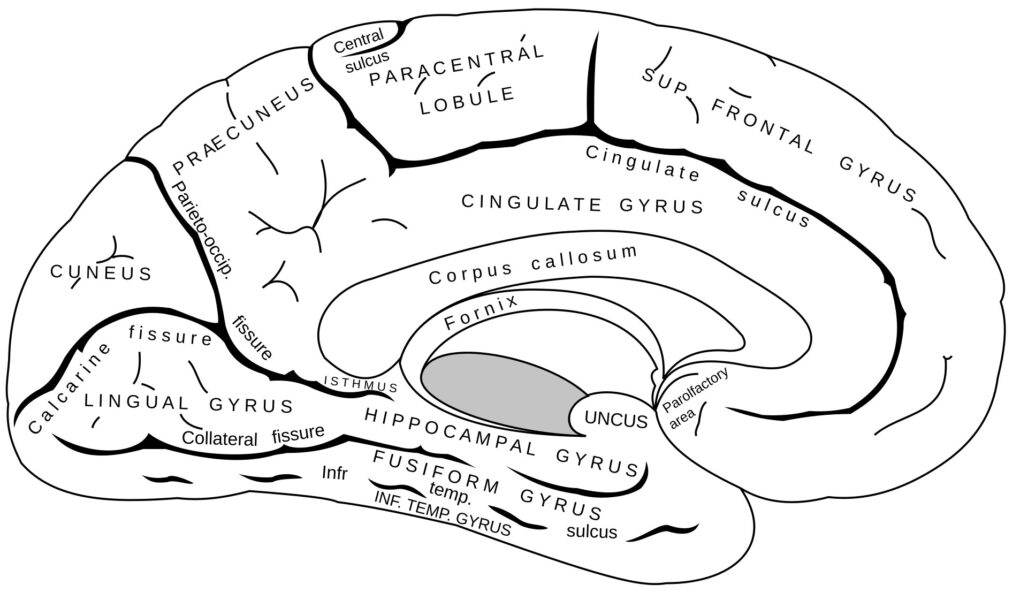
Integrated Information Theory (IIT), developed by the neuroscientist Giulio Tononi, starts from the opposite end. Instead of asking what the brain does with information, it begins with what experience is like (unified, specific, structured) and asks what kind of physical system could have those properties. Its answer is a system whose parts constrain each other in a highly integrated way, measured by a quantity called phi. IIT’s supporters have argued that the relevant structures in humans sit mostly toward the back of the cortex, not the front.
So the theories disagree about what consciousness is and also about where to look for it. That second disagreement is what made a head-to-head test possible.
An adversarial collaboration
The project, funded by the Templeton World Charity Foundation and run by a group called the Cogitate Consortium, used a method borrowed from the more self-critical corners of psychology: the adversarial collaboration. Proponents of both theories sat down with neutral researchers and agreed, before any data were collected, on what each theory predicted. The predictions were pre-registered. Several independent labs then collected the data, using three different ways of measuring the brain: fMRI, MEG, and recordings from electrodes placed inside the skulls of epilepsy patients who were already undergoing monitoring.
The basic task was simple. Participants looked at pictures shown for different lengths of time. The question was how brain activity tracked what people consciously saw. Roughly, Global Workspace Theory expected ignition-like bursts of activity in the front of the brain, including when a stimulus disappeared, and expected the prefrontal cortex to carry information about what was seen. IIT expected activity in the back of the brain to be sustained for as long as the experience lasted, with the posterior regions staying synchronised with one another.
The New York announcement and a lost bet
Preliminary results were presented in June 2023 at the annual meeting of the Association for the Scientific Study of Consciousness (ASSC) in New York. The headline was that neither theory came out clean. Some predictions of each held up; key predictions of each failed.
The meeting also settled a famous wager. In 1998, at an earlier ASSC meeting in Bremen, the neuroscientist Christof Koch bet the philosopher David Chalmers that within 25 years science would have found a clear neural signature of consciousness. Chalmers bet against. Twenty-five years later, on stage in New York, Koch conceded and paid up with a case of fine wine. Then the two made a new bet, this time running to 2048. Koch, it should be said, has long been one of IIT’s most prominent supporters, so the concession carried a certain weight.
The “pseudoscience” letter
The calm did not last. Press coverage of the New York event tended to present IIT as the winner, or at least as the leading theory, and that irritated many researchers. In September 2023, a letter signed by 124 scientists and philosophers appeared on the preprint server PsyArXiv. It argued that IIT should be labelled pseudoscience, on the grounds that its core claims had not been, and perhaps could not be, tested empirically, and that some of its implications (for example, about which simple physical systems might be conscious) were wildly out of step with mainstream science.
The backlash to the backlash was immediate. Many researchers, including some who are no fans of IIT, thought “pseudoscience” was an inflammatory word for a theory that was, at that very moment, being tested in a pre-registered study. Others worried the episode would make young scientists afraid to work on ambitious theories.
The 2025 Nature paper
The full results were published in Nature in 2025, under the title “Adversarial testing of global neuronal workspace and integrated information theories of consciousness.” The study included 256 participants across the three measurement methods. The conclusions matched the 2023 preview: the data agreed with some predictions from each theory and contradicted central predictions of both.
For IIT, the main problem was the lack of sustained synchronisation within the posterior cortex. The theory says the relevant structure should hold together for as long as the experience lasts, and the data did not show that. For the Global Workspace, the problems were a missing ignition when the stimulus switched off, and limited representation in the prefrontal cortex of some features of what people saw. If the front of the brain is the broadcasting hub, it seemed oddly quiet about certain contents.
My take: the method won
It is tempting to read this as a draw. I think that is wrong, for three reasons.
First, the losses were real losses. Each theory made specific, written-down predictions and some of them failed in public. A theory that can absorb every result is not strong; it is empty. Whatever one thinks of the pseudoscience letter, the Cogitate study showed that parts of IIT can be put at risk, and that the Global Workspace can be, too.
Second, the results point at a question the theories glossed over: what is the front of the brain actually doing during conscious experience? One possibility, which several researchers have raised, is that prefrontal activity reflects reporting, thinking about, or acting on an experience, rather than the experience itself. If so, the old dream of finding “the” place where consciousness happens may be the wrong dream. Consciousness might be less like a light switched on in one room and more like a pattern of coordination that has to be described at several levels at once.
Third, the bet tells us something about patience. In 1998 it seemed reasonable that a clear neural marker of consciousness was a couple of decades away. It was not. That is not a scandal; it is a measure of how hard the problem is. Brain imaging can tell us when and where activity correlates with reported experience. It cannot, by itself, tell us why that activity feels like anything at all. That deeper puzzle, the one Chalmers named the “hard problem”, sat quietly behind the whole showdown, untouched.
Why this matters beyond the lab
Questions about consciousness are no longer academic. Doctors need to judge whether unresponsive patients are aware. Animal-welfare debates hinge on which creatures can suffer. And a growing number of people want to know whether AI systems could ever have experiences. Each theory gives different answers: the Global Workspace ties consciousness to a certain kind of information architecture, while IIT ties it to the physical causal structure of a system, which is one reason IIT’s proponents have argued that ordinary digital computers are poor candidates for consciousness. When the stakes are that high, a field that tests its theories against each other, instead of just promoting them, is exactly what we should want.
The great consciousness showdown did not crown a winner. It did something more valuable: it showed that the contest can be held at all.
Further reading
- Consciousness and the Brain: Deciphering How the Brain Codes Our Thoughts, Stanislas Dehaene (2014)
- The Feeling of Life Itself: Why Consciousness Is Widespread but Can’t Be Computed, Christof Koch (2019)
- Being You: A New Science of Consciousness, Anil Seth (2021)
- The Conscious Mind: In Search of a Fundamental Theory, David J. Chalmers (1996)
- A Cognitive Theory of Consciousness, Bernard J. Baars (1988)