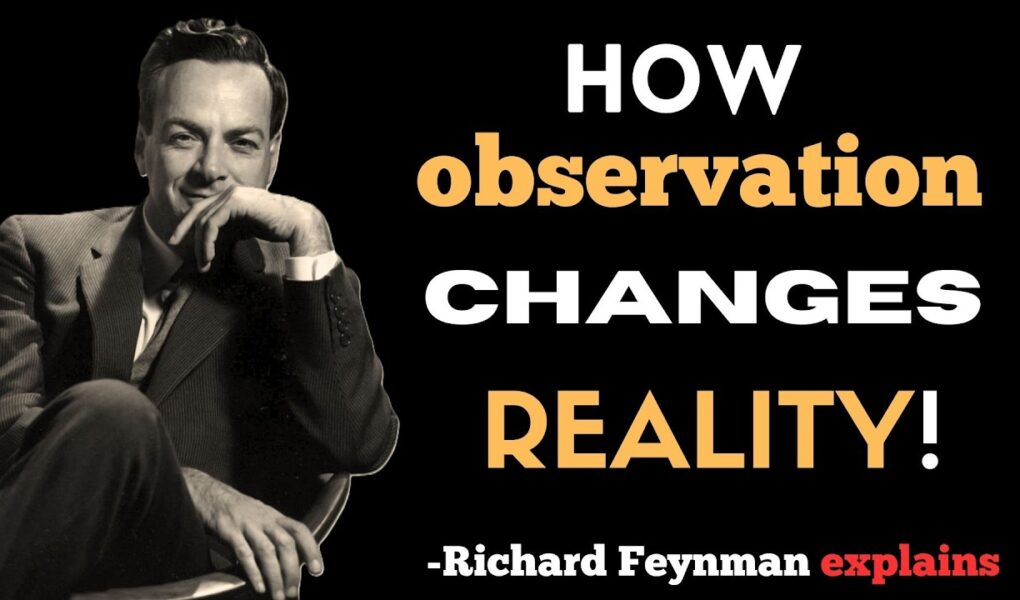
Learn Like Feynman
We start with simple, classical cases: thermometers that cool a cup of coffee, lights that disturb shy fish, and how any probe necessarily interacts with its target. From there we move into quantum territory where the stakes are higher. The double slit experiment, Schrödinger’s cat, and delayed choice setups show how the availability of information and entanglement with measuring devices determine whether systems display interference or behave like particles.
Key concepts are explained clearly: superposition, coherence, and decoherence. You will learn why fragile quantum states lose their weirdness when they become correlated with many uncontrolled degrees of freedom, and how that produces the classical world we experience. We cover quantum eraser and weak measurement experiments to show how erasing or gently probing information changes the observed statistics without invoking spooky action or consciousness.
Information theory and thermodynamics are woven into the story. Learn why measurement is a physical process that transfers information, why resetting devices costs energy, and how the Landauer principle links knowledge to heat. Practical implications for quantum technologies are discussed: why quantum computing struggles with environmental noise, how precision measurements contend with measurement back action, and how smart measurement design can exploit back action for control.
Perfect for curious viewers who want a rigorous but accessible guide to what physicists actually mean when they say observation changes reality. No mystical claims, just clear reasoning, striking thought experiments, and the physical mechanisms—interaction, amplification, decoherence—that make measurement matter.
Source

BUT unlike physicists, you can ignore my shameless attempt to beg some likes 🙂